



About the Performance
Ravinia is grateful for media support from


Fiesta Ravinia Map & Schedule: Open Map Download Map & Schedule
Fiesta Ravinia returns with an unforgettable celebration of Latin culture, featuring the legendary Los Tigres del Norte and the Ravinia debut of rising sensation Lucía!
From their humble beginnings in Los Mochis, Sinaloa, Los Tigres del Norte embarked on a journey that would transform them into one of the most influential groups in Latin music history. Over a remarkable four-decade career, they have recorded more than 55 albums and 700 songs, selling over 30 million copies worldwide and earning an extraordinary 140 platinum, 135 gold, and one diamond record. With 15 Grammy nominations—and a win for América sin fronteras—they have become global ambassadors of norteño music. They’ve collaborated across genres, set attendance records with more than 200,000 fans at the Los Angeles Sports Arena, and continue to use their platform to uplift Mexican heritage through their foundation at UCLA. More than a band, they are a cultural institution whose songs transcend borders.
Opening the night is 24-year-old Lucía (Lucía Gutierrez Rebolloso), a rising star from Veracruz whose singular artistry bridges jazz, Latin, and pop. In 2022, she made history as the first Mexican artist to win the Sarah Vaughan International Jazz Vocal Competition. Since this triumph, she captivated audiences across the globe with performances at Carnegie Hall, Royce Hall, and more.
Don’t miss this powerful celebration of culture, community, and timeless music under the stars at Ravinia!
1:30 – 7:00 PM Food Trucks: Bella’s Kitchen & Café Tola / Churros: Lupita’s Bakery (Picnic Grove)
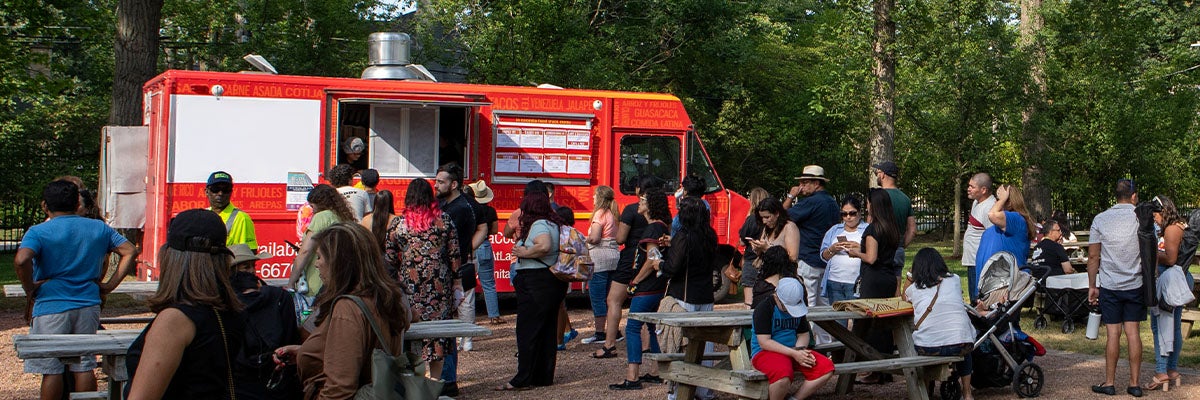
At the north side of the park, food trucks serve Latin food favorites from park opening through the start of the main-stage concert! Bella’s Kitchen is a women-owned food truck serving authentic Mexican food made from traditional recipes; Café Tola brings their famous empanadas, tacos, and more; and Lupita’s Bakery serves fresh churros with a variety of fillings and toppings.
2:00 – 6:00 PM Ballet Folklórico (Around the Park)
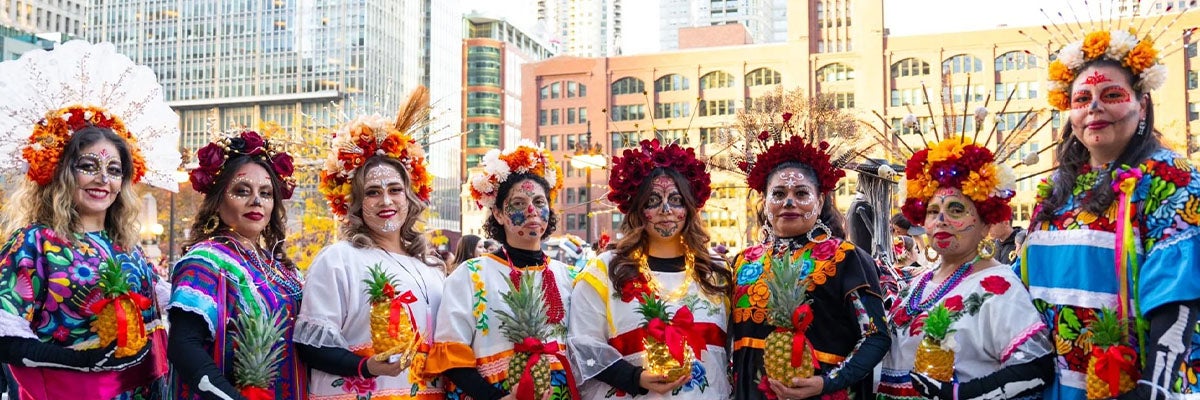
- 2:00 – 2:45 PM (Martin Theatre Plaza)
• Three 15-minute standing shows - 3:00 PM (Hunter Pavilion Outer Walkway)
• Walking show - 3:30 PM (KidsLawn, North Lawn)
• Walking show - 4:00 PM (Picnic Grove, North Lawn)
• Walking show - 4:30 PM (Carousel Stage Plaza)
• Walking show - 5:00 – 5:45 PM (Martin Theatre Plaza)
• Three 15-minute standing shows - 6:00 PM (North Lawn)
• Walking show
2:00 – 6:00 PM Ballet Folklórico Character Photo-Op (Northern Trust Tent, on the North Lawn)
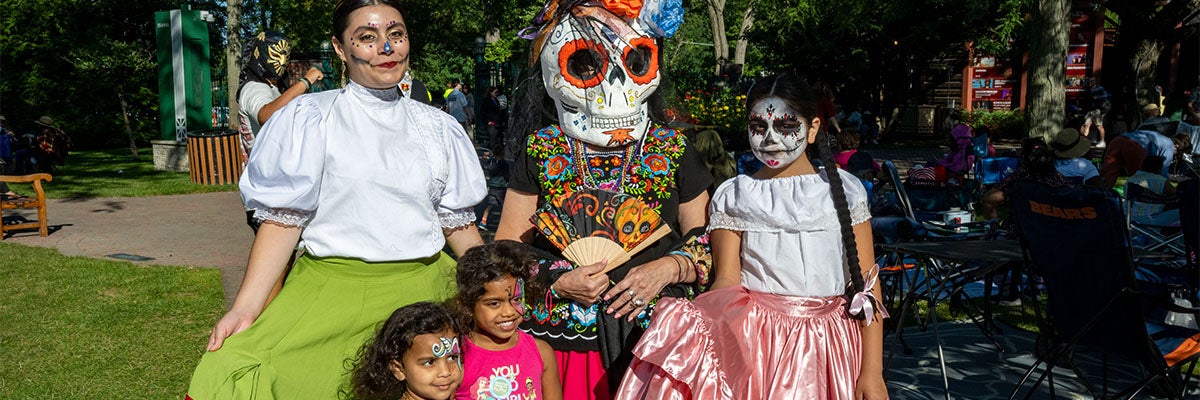
Ballet Folklórico cultivates a vibrant and inclusive community in Chicago where children and youth are empowered through cultural enrichment, artistic expression, and educational opportunities, fostering a deep pride in their heritage and a commitment to lifelong learning. Ballet Folklórico is dedicated to providing accessible and engaging after-school programs that celebrate and preserve cultural diversity. Founded in 2024, the organization aims to inspire the children and youth of Chicago by offering a safe, nurturing environment where they can explore the arts, develop new skills, and build lasting connections within their communities. Through its programs, Ballet Folklórico strives to enhance the quality of life for participants and create a brighter future for all.
2:00 – 3:30 PM Family Music & Art Activities (KidsLawn, on the North Lawn)
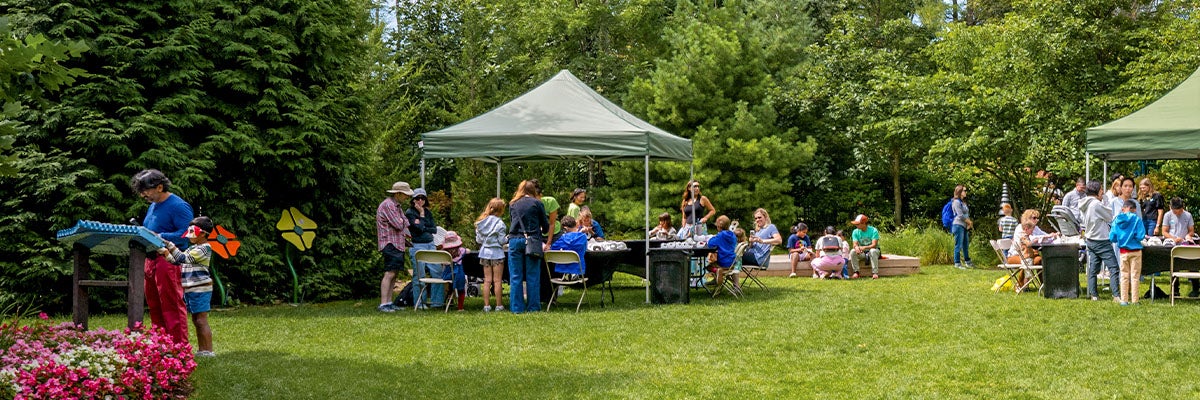
This family-friendly space on the North Lawn is the perfect place for kids to run and play between interactive, large-scale percussion instruments and bring out their creative energy.
Visit KidsLawn in the early afternoon, before the performance by the Sistema Ravinia orchestra, for more family-fun activities presented by Ravinia’s Reach Teach Play music education and community engagement team.
2:30 – 5:00 PM Lucha Libre Internationale wrestling (South Lawn)

Chicago’s Lucha Libre Internationale brings a combination of traditional “Lucha Libre” (Mexican wrestling) and American wrestling, creating a hybrid style full of impressive acrobatic feats and riveting action.
3:00 – 6:00 PM Face Painting: Art by Griz (Santa Fe Tent, on the North Lawn)
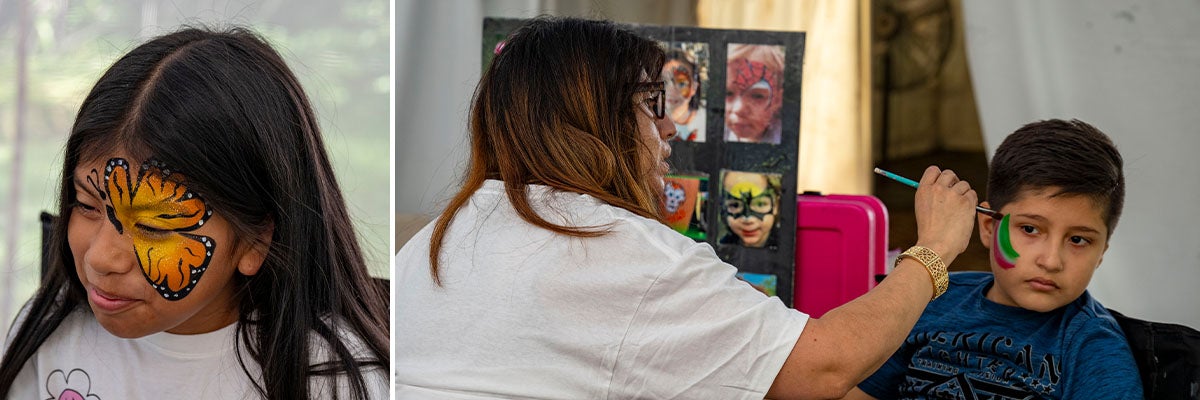
Come to the large tent at the north edge of the park—just down the path from the Picnic Grove—for free face painting by Art by Griz, featuring festive, colorful designs.
4:00 – 4:30 PM Sistema Ravinia orchestra (Carousel Stage)
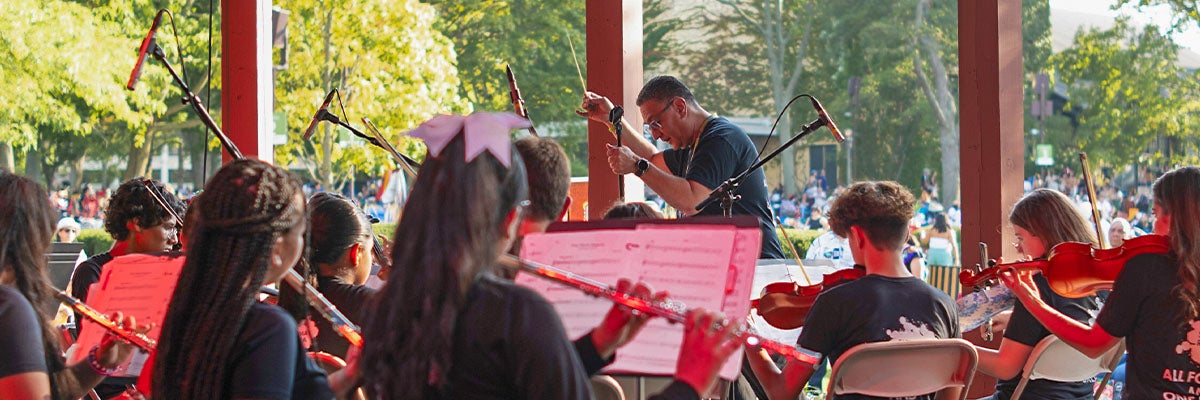
Ravinia’s vision of an intensive and transformational music education program, Sistema Ravinia fosters social development through exceptional music training for 3rd–12th grade students in Chicago and Lake County public schools. Inspired by the influential El Sistema model, the program provides students daily ensemble and orchestral instruction on their instruments. Sistema Ravinia’s first site was launched at Catalyst Circle Rock School, located in Chicago’s Austin neighborhood, and expanded to serve several Waukegan and neighboring Lake County schools in 2015, using Ravinia’s own Bennett Gordon Hall as the program site. Furthering the festival’s connection to Chicago’s Lawndale neighborhood, Sistema Ravinia’s original Austin site expanded to include the West Side community in 2020.
6:00 – 6:45 PM Lucía (Carousel Stage)

Four years ago, 25-year-old singer Lucía was a finalist at the Sarah Vaughan International Jazz Vocal Competition—and the first Mexican artist ever to enter the contest. For the final round, she picked a standard that reflected her musical sensibility, colored in equal parts by the beauty of jazz and the Latin American songbook: “We played ‘What a Difference a Day Makes,’ which was popularized by Dinah Washington, but in its initial incarnation was a bolero written in Spanish by María Grever. We started it as a jazz ballad in English, then switched to Spanish and added some zapateado dancing.” Lucía won the competition, and doing so with such a soulful, multicultural rendition of a jazz standard also marked her arrival on the music scene. Naturally, the song is the first track on her self-titled debut album, where she not only showcases her superb vocal technique, but also her versatility bridging the gaps between jazz, Latin, and pop music. From her velvety reading of McCoy Tyner and Sammy Cahn’s “You Taught My Heart To Sing” and an achingly vulnerable cover of Olivia Rodrigo’s “Lacy” to a mournful “Alfonsina y el Mar” and a version of “Veracruz” that brims with Mexican pride, the album has the emerging singer surrounded by jazz virtuosos: Venezuelan pianist Edward Simon, American double-bassist Larry Grenadier, Mexican drummer Antonio Sánchez, and Puerto Rican saxophonist David Sánchez. Her talent was nurtured from a very young age. Born in Veracruz, Lucía Gutierrez Rebolloso began performing at age 2, singing and dancing in her parents’ son jarocho band, Son de Madera. She began studying voice at 13 at Universidad Veracruzana, and after completing a bachelor’s degree in jazz studies in 2022, Lucía contributed vocals to Natalia Lafourcade’s De Todas Las Flores and joined the singer-songwriter at Carnegie Hall, having been a backup singer on tour for two years. She has also already collaborated with the likes of Aloe Blacc, La Santa Cecilia, Quetzal, Alex Mercado, and the National Jazz Orchestra of Mexico, playing such other major stages as Rose Hall at Jazz at Lincoln Center, El Cantoral, the National Center for the Arts and the Teatro de la Ciudad Esperanza Iris in Mexico City.
7:00 – 9:00 PM Los Tigres del Norte (Hunter Pavilion)

Decamping from Mexico for sunny San Jose, CA, when he was barely a teenager, Jorge Hernández, together with three of his younger brothers—Hernán, Eduardo, and Raúl—and cousin Oscar Lara, initially traveled north in search of jobs to support their family back home. However, in forming the band Los Tigres del Norte, they found much more than steady work as musicians, quickly earning a voracious following with their original songs emphasizing contemporary social issues and other themes that spoke to the experience of Mexican Americans. The band began playing in parks and on local radio broadcasts once the quintet arrived in California in the late 1960s, but they were soon given the opportunity to record their corridos and quickly tapped into a massive audience with “Contrabando y Traición,” a ballad about a woman who shoots her drug-running lover and takes off with the money. The song became so popular that it inspired a telenovela about the fictitious protagonist. Always socially conscious, Los Tigres set themselves apart from other corrido performers by never glorifying the criminals in their ballads. Los Tigres’ ascent to fame turned their genre of norteño music, previously localized to the Mexican–American border, into an international sensation, with Los Tigres as its foremost icon. The band has also since been named one of the 15 most influential Latin artists of all time by Billboard, having contributed such modern touchstones as “Jaula de Oro,” which tells of life in the “gilded cage” of the United States and laments the erosion of Mexican culture among the children of immigrants. In addition to having won several Grammy and Latin Grammy Awards across their vast discography, Los Tigres have been named BMI Icons and received a star on the Hollywood Walk of Fame. In 2018, for the 50th anniversary of Johnny Cash’s legendary At Folsom Prison album, Los Tigres became the first and only musicians since then to record there—including a special translation of “Folsom Prison Blues”—and they featured in a documentary to illuminate the experiences of Latine people incarcerated in the US.